Traditional Craftsmanship
Sustainability
Plant-dyed, Sun-dried “Soft Gold”
ABOUT OUR XIANGYUNSHA SILK
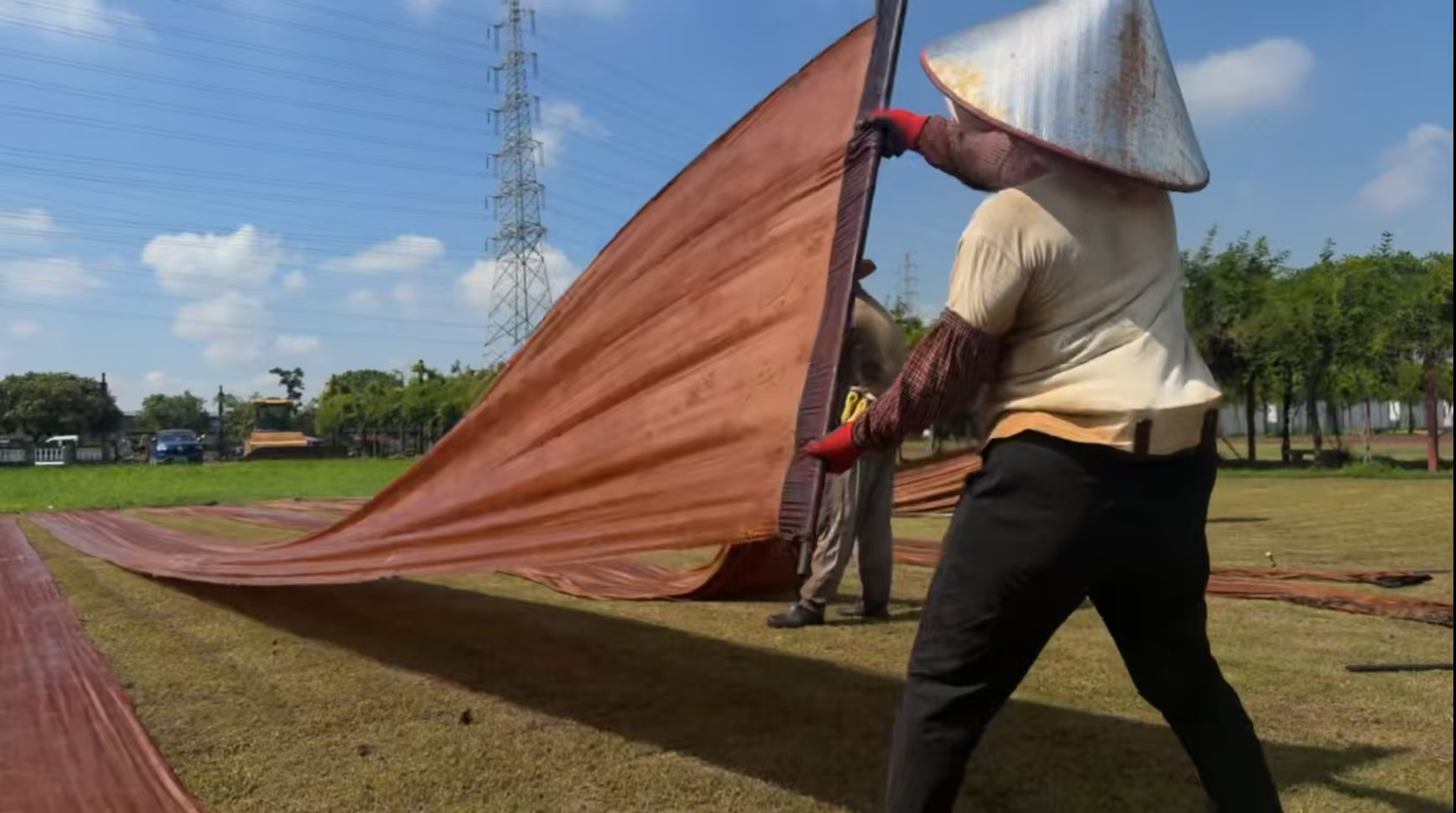
Xiangyunsha, known in the West as gambiered Canton silk — is one of the rarest silks in the world, and one of the few still made entirely by hand, outdoors, in a single place: the river townships of Shunde, in Guangdong. The textile industry calls it soft gold.
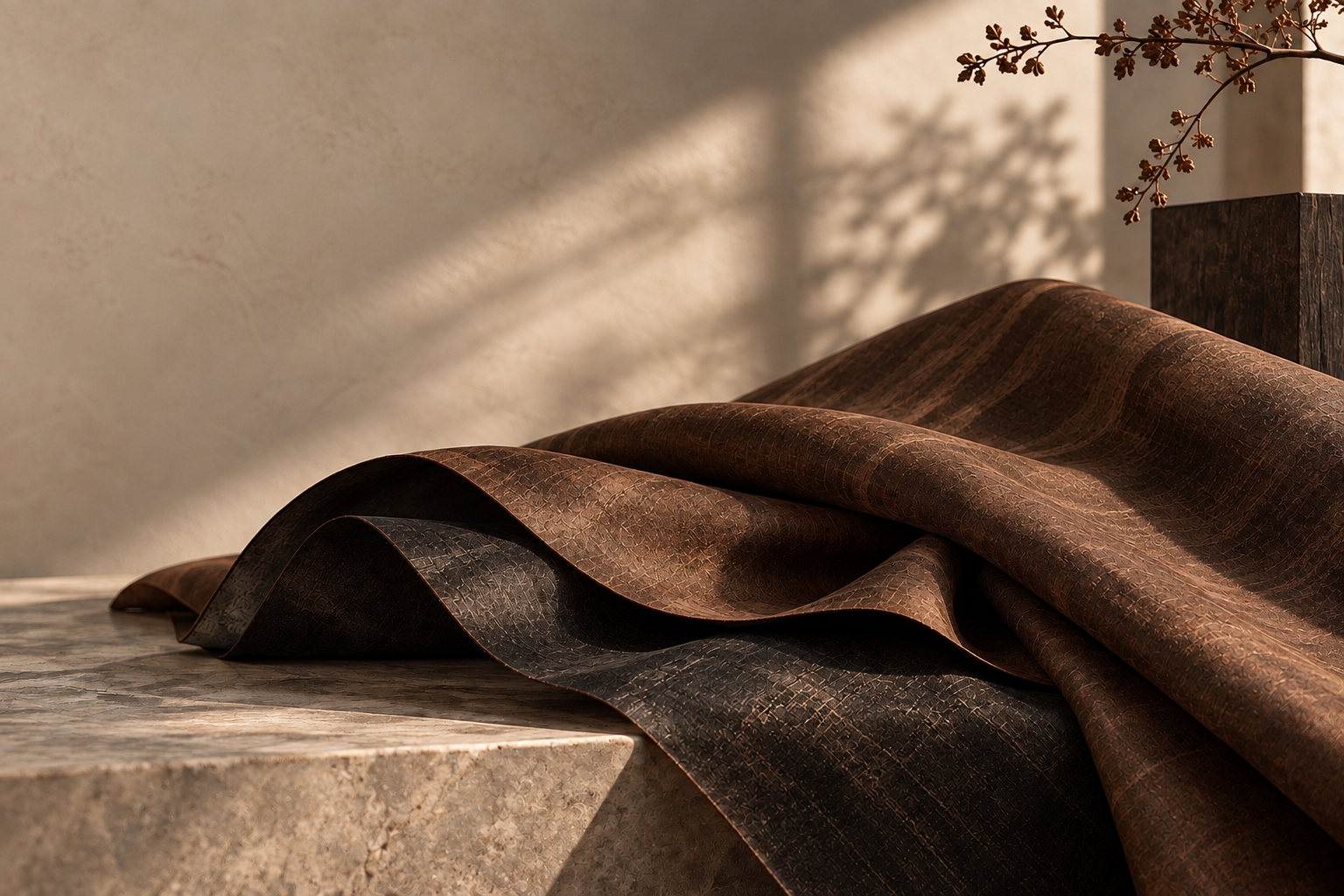
Against the skin it is cool and soft, and it improves with wear, each wash leaves it gentler than before. Its colours come from the earth directly, so no two lengths are alike; every piece carries the mark of its own season, its own patch of field.
There is something quietly moving in that. To wear xiangyunsha is to wear sun, river and root, the elements that made it, still present in the silk. Nature is not printed on it. It is it.
In The World of Speed, We Choose Time
In the villages of GuangDong(in specific our atelier Shunde), the year decides what can be made. From spring the fields are laid with silk; through the height of summer the heat is too fierce and the work pauses; by late autumn the light begins to weaken, and by November it is over. The fields fall quiet, and nothing more is made until the sun returns.
No other textile is made this way before. It is simply the condition of the Xiangyunsha silk — a craft that embraces time, and it is ruled by the weather, just like well aged wine and champagne. This is why so little of it exists.
The Art of Natural Dyeing
Xiangyunsha is not dyed in the way modern fabric is dyed. It is fed, slowly, by a plant.
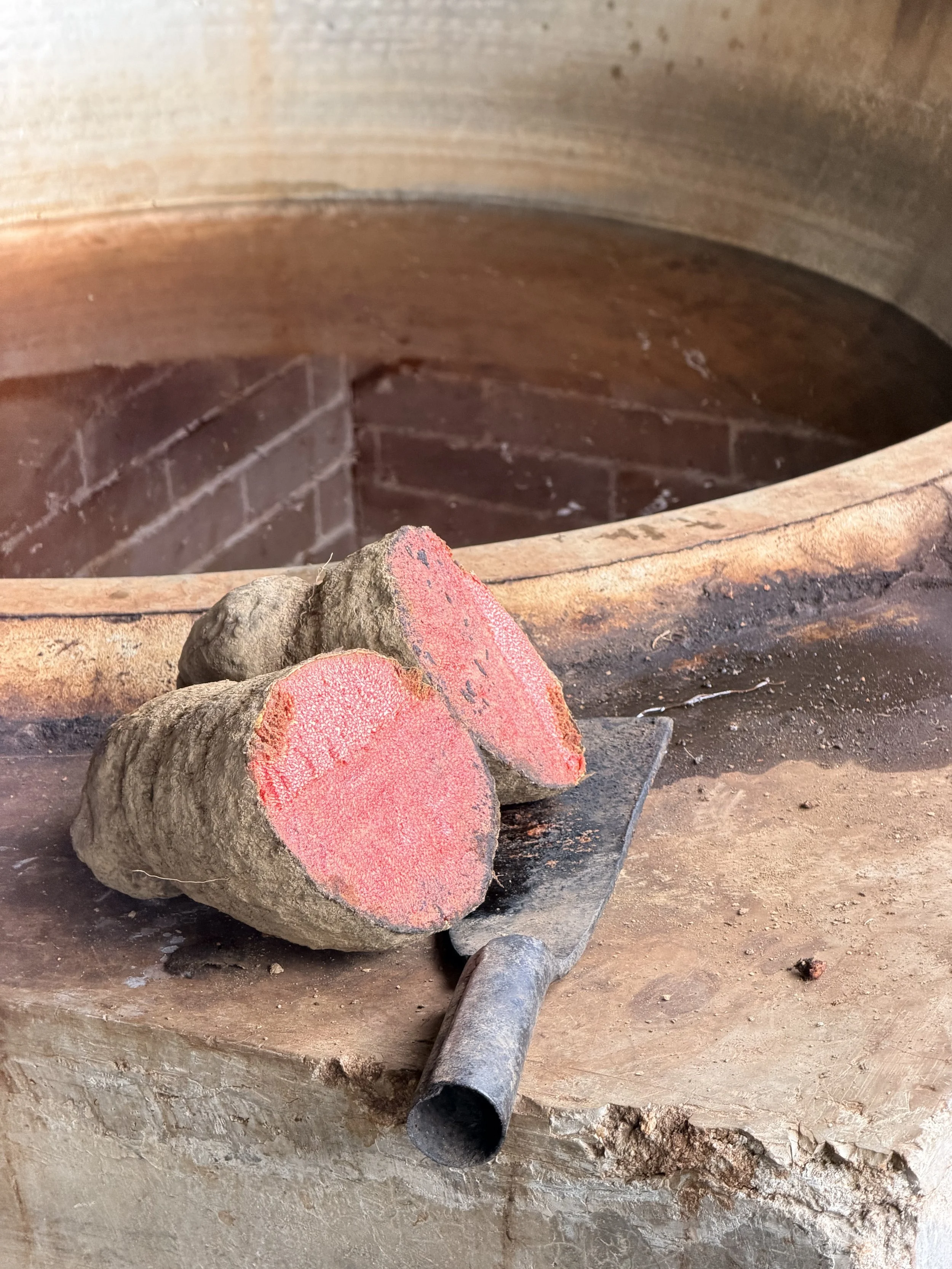
It begins with pure woven silk, and with the wild mountain root (yam) the Cantonese call Shu Liang , Dioscorea cirrhosa — crushed for its tannin-rich juice. The silk is steeped in it, laid out on the grass to dry beneath open sky, then steeped again. And again: some thirty times over, each soaking carrying the colour a little deeper into the fibre, each drying setting it there. It is a ritual more than a technique, and it cannot be shortened. The root gives the silk its russet earth tones, and gives it something else besides, a silk that is gentle against the skin, breathable, and kind to those who cannot wear much else.
When the colour runs deep enough, one face is coated with cold, iron-rich mud drawn from the riverbed in GuangDong. The minerals meet the tannin, and under the sun that face turns to lacquered black, while the reverse keeps its warm reddish amber. The silk is washed in the river and sun-cured one last time. Thirty steps in all, about two weeks of work, and no machine has ever reproduced it.
Its rarity comes down to the weather. The sun-drying cannot be done in fierce heat, in cold wind, or under a weak sun, which leaves only a few months in the year when the silk can be made at all. When the season turns, the fields fall quiet. Each length is finished on its own rather than run off in a batch, so every piece differs slightly from the last, and the number of artisans who still hold the full craft grows smaller each year. China protects the tradition as national intangible cultural heritage.
Xiangyunsha silk arrives crisp and softens with wear into a patina, the way good leather does, a silk meant to be kept for decades, not seasons. Made this slowly, it can only be made one piece at a time. So nothing is made until a woman asks for it. Nothing is left over. A root, a river and the sun made this silk, and the earth will take it back in the end.
How Our Silk Is Made
-

① The Root
The silk is steeped in the juice of Shu Liang, a wild mountain root, until it takes on a deep russet. Not once, but more than thirty times.
-

② The Mud
One face is coated with cold, iron-rich mud from the riverbed. The minerals meet the tannin, and under the sun that side turns to lacquered black.
-

③ The River
Washed clean in the river and sun-cured a final time. What emerges has two faces: black and amber, and belongs to no other cloth on earth.
-
④ The Sun
Between each soaking it is laid out on the grass to dry, so light it must be pinned against the wind. Only the sun sets the colour, and only in the right months.
Why Made To Order
The world does not need more clothes. Fashion now produces more than it can sell and more than the earth can absorb, tonnes of it buried or burned each year, much of it never worn at all.
I have spent my life in this industry, and I am no longer willing to add to that. Xiangyunsha could not be mass-produced even if I wished it: it is made by hand, out of doors, in a season the weather chooses, and there simply isn't much of it. So I make the only way this silk allows — one piece at a time, cut when a woman truly asks for it, and never before. Nothing sits in a warehouse. Nothing ends a season on a sale rail. What I make is meant to stay: worn for decades, softening as it goes, passed on rather than discarded. And when its life is finally over, it returns to where it came from: a root, a mineral, a length of silk, all of it compostable, none of it left behind.
YÀN ZǏ is made rare, made slowly, made to last, and made to return.
Heritage - Certified Origin
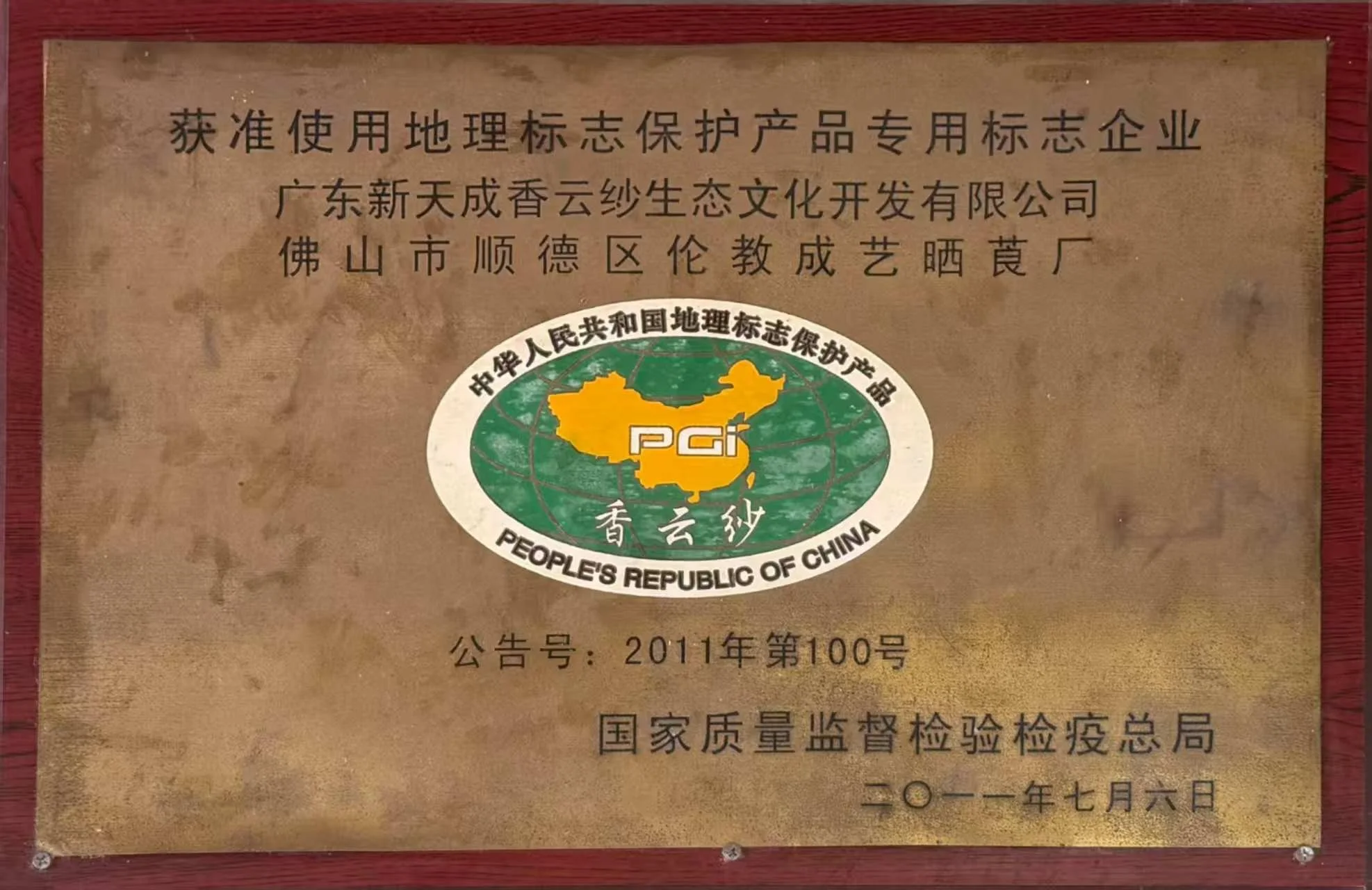
Official Geographical Indication (GI) Certificate for Xiangyunsha(Gambiered Guangdong Silk) — recognizing the Chengyi atelier, Shunde, as an authorized producer. Issued by China's national quality authority, 6 July 2011 (Announcement No. 100). Proven the guarantee of authentic origin and traditional craft.
This heritage is protected. In 2011, China granted Xiangyunsha official Geographical Indication (GI/PGI) status — the same category of protection that safeguards Champagne or Parmigiano-Reggiano in Europe. Only workshops that meet the strictest standards of origin and craft are authorized to bear the mark. The certificate shown here recognizes our atelier in Shunde as one of very few guardians of the tradition, ensuring that every piece we offer is genuine, traceable, and made the way it has been for over a century.
Provenance
YÀNZǏ Atelier — Shunde
Every YÀNZǏ piece is born at our sun-dyeing atelier in Shunde, one of only a handful of workshops in the world authorized to work an extraordinary silk called Xiangyunsha.
Known in the West as gambiered Guangdong silk, or "mud silk", Xiangyunsha is one of the rarest textiles in the world. It is dyed by hand using the juice of the wild yam root and finished in the mineral-rich river mud of the Pearl River Delta, in a process that unfolds over dozens of sun-drenched steps, and can only be done in the specific climate of Shunde, Foshan. No two lengths are ever alike.
This is the silk we begin with. From it, YÀNZǏ creates the finest scarves and silk accessories for women, men, and, the little ones too — in the spirit of French savoir-faire: made to order, quietly luxurious and modern, pared back to what is essential to daily life.
Ancient craft, traceable to its source, made for the way we dress today.